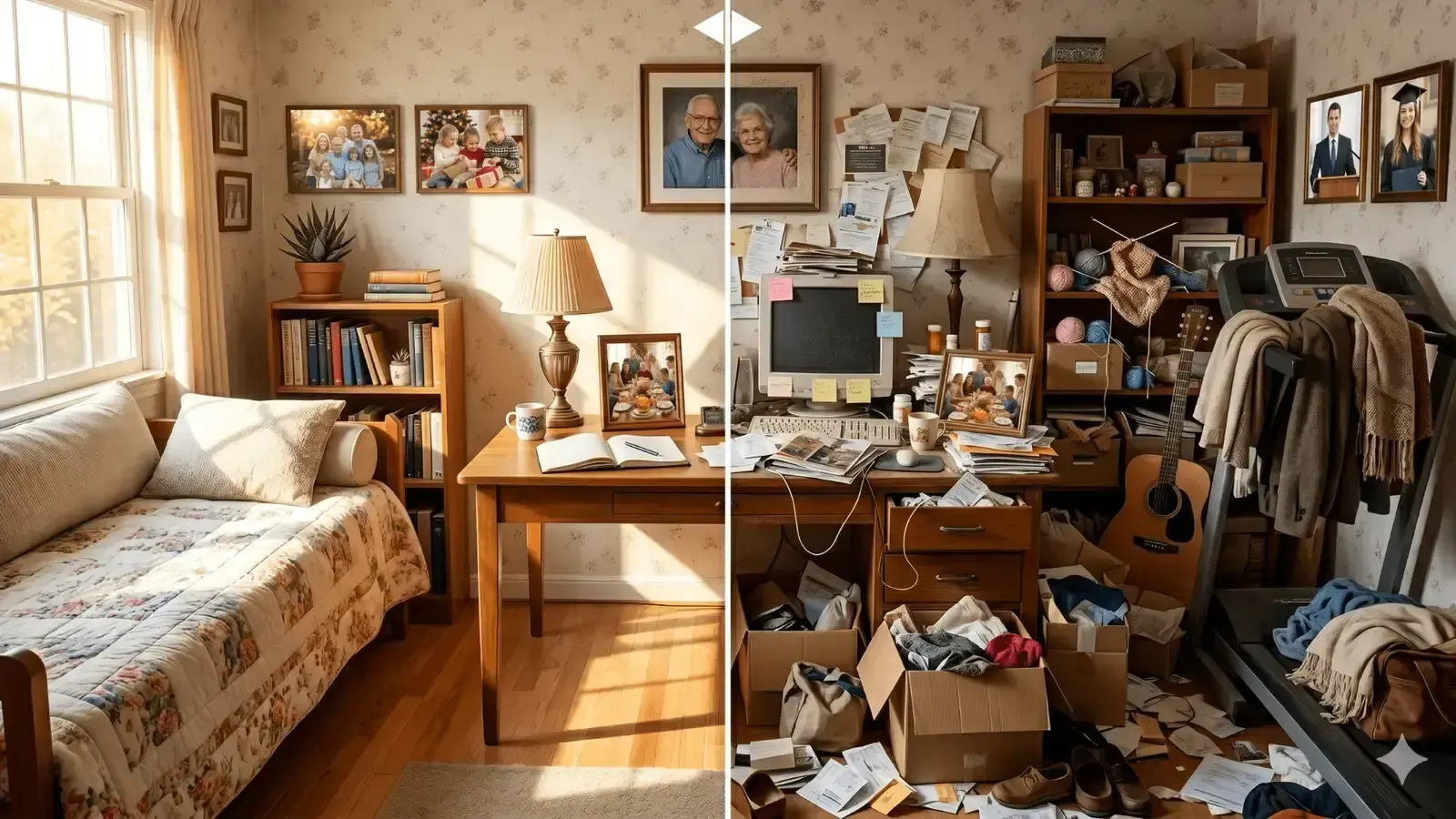
We tend to live in two halves. In the first, we spend our energy gathering — furniture, books, keepsakes, the “someday” sweater we never quite wore. In the second, many of us quietly realize that the things we collected have started to collect us.
For our parents’ generation especially, holding on made sense. They lived through booms and lean years, and they kept things because things mattered. Today, the older adults in our lives often own more than any generation before them — tucked into closets, basements, and boxes simply marked “miscellaneous.”
But somewhere along the way, a home that once felt full and warm can begin to feel heavy. For an aging loved one — especially someone managing limited mobility or memory changes — clutter stops being a weekend project and becomes something bigger: a question of safety, clarity, and peace of mind. Decluttering, it turns out, can be one of the most loving things we do.
When Our Belongings Quietly Become Obstacles
When we’re younger, a crowded bookshelf and a few scattered rugs just feel cozy. We can step over the cord, squeeze past the side table, and reach into the back of a deep cabinet without a second thought. Aging changes that relationship with space.
The amount of “stuff” in a typical home tends to grow steadily across a lifetime. We keep things out of love, out of duty to family history, or simply because deciding what to let go of feels like too much. But as strength or memory shifts, that same collection can slowly turn from the record of a life into a field of small, daily hazards.
THE PHYSICAL REALITY
Falls are the leading cause of injury-related hospital stays among older adults — and a striking share of them are entirely preventable, set off by ordinary things inside the home.
A Home That Keeps You Safe
Aging brings real changes to balance, eyesight, and bone strength. When a home is crowded, the space itself can start to work against those vulnerabilities. Clearing it out isn’t about a tidy aesthetic — it’s about removing the obstacles between your loved one and a safe, confident day.
Designing a Home That Feels Safe and Clear
A cluttered home can turn every day into a challenge for someone with dementia. If you’ve watched a loved one hesitate at shadows or get anxious in a busy room, you know how even familiar spaces can feel overwhelming.
Here are a few practical changes I’ve found make life much smoother:
Trip Hazards Hiding in Plain Sight
Loose rugs, floor cushions, low coffee tables, and stacks of magazines along a hallway are all quiet tripping risks. For anyone using a cane, walker, or wheelchair, a cluttered room shrinks the space to turn — forcing awkward movements that throw balance off.
When the Eyes Get Tired
Changing eyesight makes it harder to tell apart objects of similar color, or to notice something small left on the floor. Clutter creates a kind of visual “noise” that hides real hazards in plain sight.
Clear Paths Can Save a Life
In an emergency, paramedics need room — wide, open paths to move a stretcher or equipment. A home packed with belongings can slow down help in the moments when seconds matter most.
Clearing the excess gives back wide, predictable walkways. The eye can read the edges of a room more accurately, and mobility aids can do exactly what they were built to do.
The Clutter the Brain Can’t Filter
The physical dangers of clutter are easy to see. The mental toll is quieter, but often runs deeper — especially for someone living with Alzheimer’s or another form of dementia.
Our brains spend energy processing everything in our field of view. Each object has to be noticed, sorted, and checked: does this need my attention? In a healthy brain, that happens effortlessly. For an aging brain — and far more so for a brain navigating dementia — that capacity is stretched thin.
Overwhelm and Agitation
When there’s too much to take in, a person with dementia can’t sort the visual flood. The result is a deep sense of confusion that can surface as anxiety, distress, or sudden frustration that seems to come from nowhere.
When Shadows Become Shapes
A pile of clothes on a chair can read as a person. Shadows from clutter can look like threats. A dark rug on a light floor can appear to be a hole in the ground — enough to make someone freeze in fear. A simplified room removes those false signals.
Making Everyday Choices Easier
A closet crammed with fifty shirts, or a counter buried under appliances, turns a simple task into a puzzle. When there’s less to sort through, choosing a shirt or finding a glass stays possible — which means dressing, eating, and self-care can remain in your loved one’s own hands far longer. That’s dignity, preserved.
THE COGNITIVE SANCTUARY
A simple, well-ordered space works like an external brain. When everything has an obvious home and the visual clutter falls away, the mental load drops — and calm finally has room to return.
The Quiet Weight We Set Down
Even without a diagnosis, the emotional lift of a lighter home is real. Clutter has a way of whispering — of unfinished lists, decisions postponed, chapters never quite closed.
Letting go becomes a kind of gentle editing. It lets your loved one choose what their life looks like now, and what they want to pass on, rather than leaving a heavy, tangled inheritance for grieving family to untangle later. Releasing the non-essential clears literal and emotional breathing room. The home stops being a museum of the past and becomes a place to actually live in the present.
Gentle Ways to Help a Loved One Let Go
Helping a senior accept that it’s time to declutter is delicate work. These aren’t just “things” — they’re memory, identity, and a sense of control that may already feel like it’s slipping. Here are a few approaches that tend to lower the resistance, and sometimes even turn the corner toward welcoming the change.
1. Reframe It: You’re Not Throwing Away — You’re Gifting
Many seniors dig in because they can’t bear the thought of a treasured item ending up in a landfill or simply forgotten. So change the frame to rehoming. Try, “Who in the family would love to have this?” or “Could we donate it somewhere it’ll truly be used?”
And when something is too big to keep but means the world to them, keep the story instead of the object. Take a lovely photo of them holding it and write down what it meant. Often it’s the memory they’re afraid of losing — not the wood or the plastic.
2. Start Small to Build Momentum
Don’t announce, “We’re clearing out the basement this weekend.” That lands as a threat and shuts the door before you start. Instead: “Let’s just look through this one drawer while we have our tea.”
Begin somewhere low-stakes — a medicine cabinet of expired bottles, a pantry of old cans. The quiet satisfaction of one clear, tidy space builds the momentum that makes the harder decisions easier later on.
3. Set the Rules Before You Begin
Create a “Maybe Box.” If a decision is agonizing, don’t force it — label a box, set it aside, and agree to revisit in a month. More often than not, the contents are forgotten, and letting go becomes simple.
If they’re still actively buying or collecting, offer a gentle boundary: one in, one out. For every new thing that comes home, an older one finds a new home.
4. Protect Their Independence, Always
Never quietly throw things out when they aren’t looking. If they discover it, the trust is broken — and they’ll guard their belongings even more fiercely than before.
Offer choices inside safe limits rather than open-ended questions. Instead of “What should we do with all these blankets?” try, “Let’s keep two for the linen closet — which two are your favorites?”
5. Lead with Comfort, Not Criticism
Frame decluttering as a path to staying independent at home, not a sign of decline: “Let’s clear this path so you can move around without worrying about a fall,” or “Let’s set this kitchen up so your favorite cups are easy to reach.”
And if early memory changes are part of the picture, don’t tell them they’re confused — blame the room. “There’s so much going on this counter, it makes my eyes tired. Let’s clear it so it feels more peaceful in here.”
A Quick Checklist Before You Start
- check_circleMake sure they’re rested and fed before you begin.
- check_circleKeep each session under an hour to avoid wearing out body or spirit.
- check_circleCelebrate the progress you’ve made — not the pile that’s left.
Final Thoughts
Done with patience, decluttering isn’t about subtracting from a life. It’s about clearing space for the parts that matter most: safety, ease, and the simple comfort of a home that feels calm. Strip away the excess, and what’s left is room to breathe — a little more lightness, a little more freedom, right where your loved one lives.
And if you’re the one doing the caring, remember to leave a little room for yourself, too. Taking breaks and asking for help isn’t a luxury — it’s what lets you keep showing up with the patience and love this work deserves.